OpenAI released (opens in a new tab) GPT-6.2 Astra and Sol today. Astra is the frontier model aimed at harder professional work. Sol is the more efficient everyday option. Both are available now in ChatGPT Work, Codex, and the API.
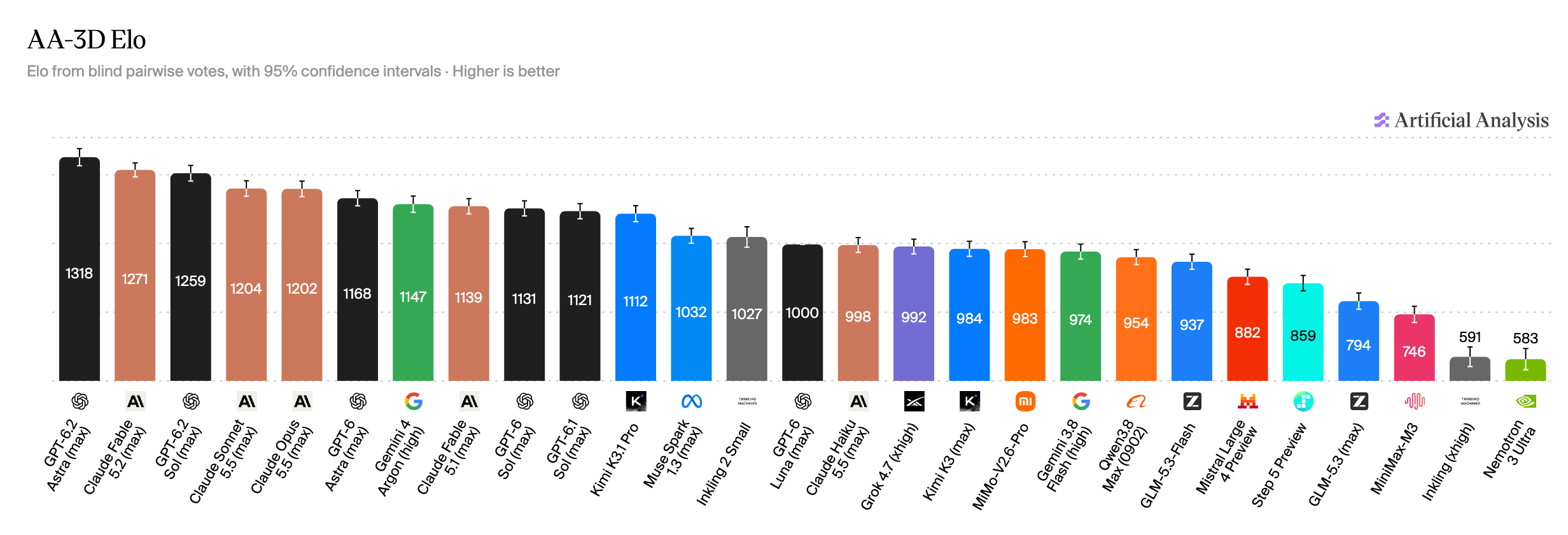
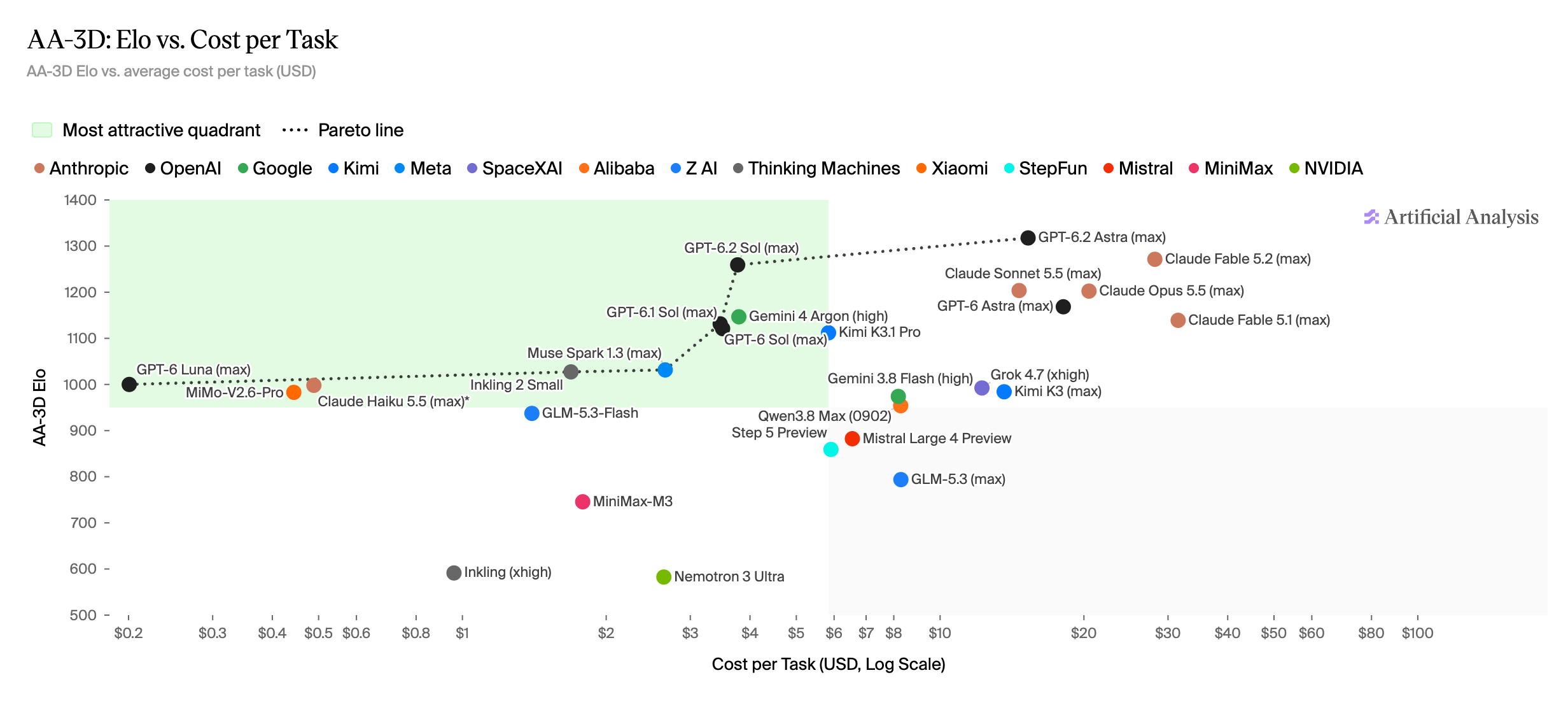
The part that matters for graphics developers is Astra’s improved handling of interactive 3D browser experiences. On Artificial Analysis’s AA-3D benchmark (opens in a new tab), models receive a written brief and produce a single web page using Three.js. Human judges then compare the resulting scenes blind. Astra currently sits first at 1,318 Elo, ahead of Claude Fable 5.2 at 1,271 and GPT-6.2 Sol at 1,259. In the head-to-head votes that produced those numbers, graders preferred Astra’s output in 139 of 152 comparisons.
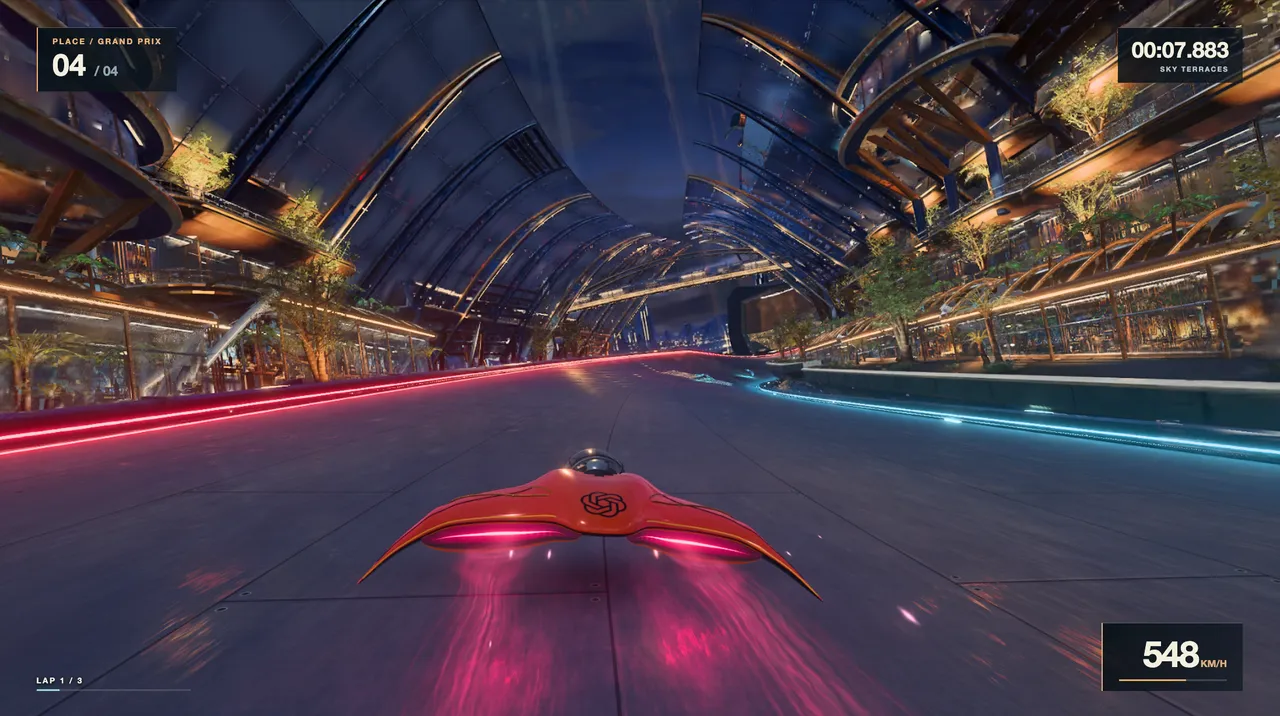
The benchmark covers the kinds of things people actually try to build: a playable pinball table, an explorable Colosseum viewed from multiple angles, machines, natural phenomena, and short game-like scenes. OpenAI’s own announcement points to the same pattern. Astra can turn a brief into a running browser experience rather than a static render or a half-working sketch. One example is a futuristic racing game (opens in a new tab) that loads as a self-contained page.
This is not a claim that the model invents new rendering techniques. It is better at the full loop that produces something a developer can open and interact with: geometry, materials, basic lighting, camera controls, and enough interaction to make the scene feel intentional instead of incomplete. For people already working in Three.js (WebGL or WebGPU), the practical difference is speed and hit rate on the first or second attempt. You still review the output, fix the odd material or control scheme, and decide whether the scene actually belongs in a real project. What changes is how often the starting point is already close enough that the remaining work is ordinary polishing rather than rebuilding the structure. Sol trails Astra on the same benchmark but remains close enough that many everyday 3D prototypes will land there first, especially if token volume matters.
Computer-use improvements sit alongside this. Astra can also drive external tools for CAD-style modeling and simulation, then bring results back into a browser context. That is useful when a scene starts in Blender or another package and needs to end up interactive on the web. It does not replace a graphics programmer’s judgment about performance, memory, or how the scene should actually feel under real input.
Worth checking if you regularly turn descriptions into playable interactive prototypes and want a higher baseline before you start editing. The AA-3D numbers and the runnable examples are the concrete signal.